Translate

Showing posts with label Solar Energy. Show all posts

Thursday, September 27, 2012

NREL: 35 Years of Clean Energy Leadership


National Renewable Energy Laboratory

NREL Newsroom

NREL: 35 Years of Clean Energy Leadership

Thirty-five years ago, when President Jimmy Carter opened the Solar Energy Research Institute (SERI) in Golden, Colorado, gasoline cost 62 cents a gallon, and solar power about $100 a watt.
Now, in the summer of 2012, the price of gasoline at the pump is $3.89 per gallon, the installed cost of solar power about $4 a watt.
That's a six-fold increase in the cost of gasoline, and a 95% reduction in the cost of solar. And with solar and wind energy growing by about 35% a year, and biofuels burgeoning, the laboratory in Golden is more vital than ever.
After 14 years as a solar institute, SERI achieved national lab status in 1991 under President George H. W. Bush. SERI became NREL, the U.S. Department of Energy's (DOE) National Renewable Energy Laboratory.

35 Years of Innovations, Breakthroughs, Discoveries
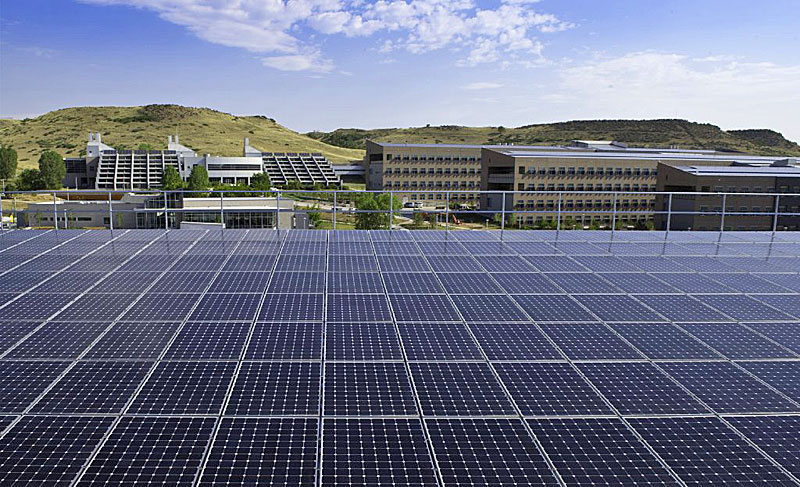
Photo of solar panels in the foreground with the NREL campus in the background, along with the grassy mesas beyond.Enlarge image
NREL's 327-acre main campus got an infrastructure boost in 2006 and 2007 when projects in the pipeline were accelerated. On the right, beyond the solar panels, is the Research Support Facility, recently tagged as the top net-zero energy building in the world.
Credit: Dennis Schroeder
What a 35 years it's been.
From its start on July 5, 1977, to today, NREL has pushed the boundaries of what's possible, leading the way to a clean energy future.
Wind turbines have grown from farmhouse curiosities to multi-megawatt behemoths.
NREL scientists inaugurated the era of the super-efficient multi-junction solar cell and combined those cells with lenses that concentrate the sun's rays by 500 times to multiply the power of photovoltaics.
The laboratory worked with industrial partners to lower the price of enzymes used to refine alternative biofuels by 97%.
And NREL scientists found ways to get two electrons from a photon of light; discovered a cost-effective way to virtually eliminate wasteful reflection off a solar cell; helped engineer an economic way to place transparent solar cells in window glass; engineered ways to get biofuels and hydrogen from algae; mapped renewable energy resources in dozens of countries; came up with new standards for aerodynamic wind turbines and concentrating solar power; and set the bar higher for sustainable buildings.
NREL researchers have won 52 R&D 100 awards — the "Oscars of Invention." That places NREL among the top national labs in R&D 100 awards per employee. Just this year, NREL won two: one for the highest-efficiency solar cell, and another for a revolutionary new type of air conditioning that uses 75% less energy than typical systems and can work in any climate.

From Rented Space to the Laboratory of the Future
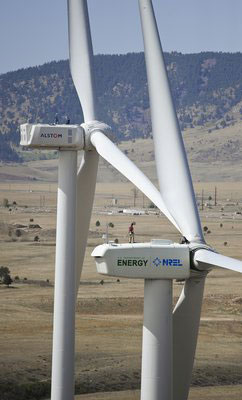
Photo of a giant wind turbine, with a man standing on the turbine's nacelle.Enlarge image
NREL's National Wind Technology Center hosts giant turbines, which manufacturers throughout the world bring to the site for testing and certification.
Credit: Dennis Schroeder
From its origins in rented office space, NREL has expanded to a 327-acre campus that is a model for what a sustainable, green office park can look like.
"When I bring visitors on the site, I often tell them that when I came to SERI, this site was 300 acres of nothing but sage brush and rattlesnakes," said Stan Bull, NREL's former associate director for Science and Technology. "But look at it now."
Today, the NREL campus is a living model of sustainability, hosting hundreds of architects, planners, and lawmakers each year, along with a multitude of scientists from around the world.
It wasn't always so.
"The people who joined SERI early, who suffered through the great swings of support and inattention in the 1980s, were like monks in a monastery keeping the candle of hope and dedication burning while nobody else cared," said Art Nozik, an NREL senior research fellow emeritus whose breakthroughs on singlet fission opened the door to greater solar cell efficiency. "Today, when the awareness and importance of our mission is understood and appreciated by a large fraction of the world's population, we can be confident that we can move forward at an accelerated rate to help our society and planet to survive and flourish."
Ron Judkoff arrived in 1978, as the organization's first building energy efficiency scientist. "Back then, we were all in rented space, and when NREL built its first major building on campus, the Field Test Laboratory Building, no one thought to invite our small group of building energy efficiency scientists and engineers into the process," recalled Judkoff, who is now NREL's principal program manager for building energy research. "In fact, most of the staff and management probably thought the term 'building science' was an oxymoron."
Last month, Construction Digital, a monthly online magazine, named NREL's Research Support Facility (RSF) — a 326,000-square-foot building housing 1,300 employees — the top net-zero energy building in the world. "Net zero" means the building uses no more fossil-fuel-based energy in a year than it makes up for in on-site renewable energy. In all, the RSF has received more than 30 awards for sustainable design and construction.
Now, with several buildings that have achieved lofty LEED (Leadership in Energy and Environmental Design) status, the technologies developed by NREL and its industrial partners are found on the campus and in the world market. The "SolarWall" transpired collector, light louvers, electrochromic and thermochromic windows, thermal storage walls, and NREL's Open Studio software tools that simplify optimal energy design, are getting friendly receptions in the marketplace.
"I expect the awards to keep coming, and our campus to serve as a shining example of energy efficiency throughout the world for many years to come," Judkoff said.

Origins Traced to 1970s Oil Embargo
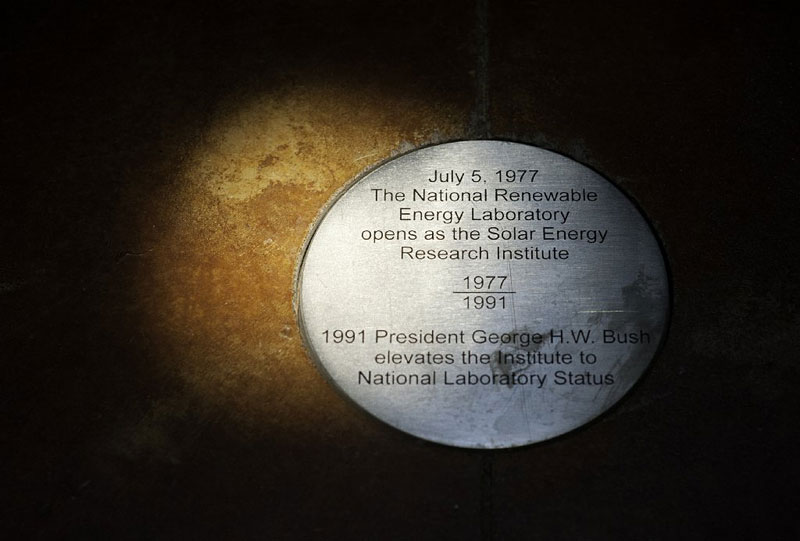
Photo of the sun hitting a medallion on the floor of a building at NREL.Enlarge image
The sun hits the commemorative medallion on the floor of NREL's Science and Technology Facility (S&TF) at solar noon on July 5, 2012. The medallion was placed in the S&TF in 2006 to commemorate the anniversary of the lab in 1977, and the day in 1991 when President George H.W. Bush elevated the institute to National Lab Status.
Photo by Dennis Schroeder / NREL
SERI was approved by Congress and championed by President Carter in large part because of the oil embargo that pushed the price of gasoline from about 36 cents a gallon in 1972 to 62 cents in 1977.
From a focus on solar energy, NREL has grown to also include cutting-edge breakthrough research in wind, biofuels, energy efficiency, transportation, and geothermal energy.
Walt Musial was hired in 1988 as a testing engineer at a time when many of the U.S. wind power companies were going bankrupt because of canceled tax credits.
"The industry was moving to Europe, and NREL's National Wind Technology Center [NWTC] was one of the last safe havens where good-quality research was being done to explore big problems still facing the technology," Musial recalled.
NREL's wind center became the go-to site for companies, both foreign and domestic, to test their turbines and blades in the wind blowing down from the foothills of the Rocky Mountains and in the NWTC's dynamometer.

Not Just a Research Lab, but a Factor in the Marketplace
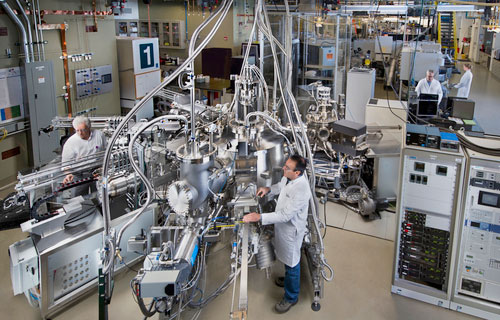
This photo shows two men in white lab coats amid gleaming silver machinery with hoses heading to an unseen ceiling. Enlarge image
Two scientists work on a project to enhance the efficiency of thin-film solar cells at NREL's Process Development and Integration Laboratory, which helps private companies boost the performance of their cells and modules.
Credit: Dennis Schroeder
In its early years, SERI/NREL was a research lab that didn't involve itself in the realities of the marketplace. That changed in the early 1990s as NREL reached out to industry to help turn science into technology, working with the private sector to ramp up and bring renewable energy and energy efficiency to market.
Many of today's top solar companies percolated their ideas in the DOE Incubator program run at NREL.
NREL has been issued 262 patents and has agreements with 305 industry partners, 64 universities, and 33 not-for-profit organizations. It currently has 116 Cooperative Research and Development Agreements (CRADAs) with industry.

An International Reach; a Helping Hand in Disasters

NREL's reach spreads across five continents — from wind and solar studies in Indonesia to biofuel-powered vehicles in Antarctica.
NREL's Roger Taylor and Dick DeBlasio recall that in the wake of the Earth Summit in Rio de Janeiro in 1992, they implemented the first stage of what later became a Brazilian national program to deploy solar and small wind power systems in communities without electricity in rural Brazil. "Luz para Todus" (Light for All) became a multi-year rural electrification program after the installation of more than 100 lighting, water pumping, and health clinic systems. "Our work in Brazil was very rewarding and fun," said DeBlasio, a chief engineer. "I started here in May of 1978, but it seems like yesterday."
NREL scientists and engineers have helped rebuild communities devastated by hurricanes, floods and tornadoes — showing how to bring sustainable energy and architecture to cities and towns, from tornado-ravaged Greensburg, Kansas, to New Orleans, flooded in the wake of Hurricane Katrina.

Renewable Energy's Growth Has Exploded

In the 35 years that NREL has led the way to a clean energy future, renewable energy has exploded:
  • Installed renewable energy tripled between 2000 and 2009 in the United States and globally.
  • While renewable energy comprised 2% of all new electrical capacity installations in the United States in 2002, by 2009 renewable energy comprised 55% of all new installations.
  • Installed wind energy capacity increased by a factor of 14 between 2000 and 2009 in the United States.
  • The weighted average price of wind power in the United States fell to 4.4 cents per kilowatt hour, making it cost competitive with fossil fuels.
  • The United States leads the world in wind energy capacity at more than 35 gigawatts.
Just in the past decade, solar energy generation quadrupled in the United States. The annual growth rate of installed solar photovoltaic electricity capacity was 39%, while wind energy capacity grew by 34% a year.
Bull recalls the early days as "a mixture of wild-eyed hopes and utter disappointment," as the lab at first grew rapidly, then "declined precipitously overnight" when half the staff was laid off. Now, more than 2,000 people are employed at NREL.
"SERI/NREL has been and I think always will be a special place because the staffers have such a deep-seated dedication and commitment to the vision and mission," Bull said. "Just the name NREL is an incredible 'door opener' both nationally and internationally. It's almost frightening at times the impact the name alone has on acceptance in the world of energy."
Learn more about NREL's 35 years of innovationPDF.
— Bill Scanlon


Posted originally by NREL. Please follow us on Twitter and "like" us on Facebook!

Tuesday, September 11, 2012

NREL Narrows Energy Tech Emissions Estimates


National Renewable Energy Laboratory

NREL Newsroom

NREL Narrows Energy Tech Emissions Estimates

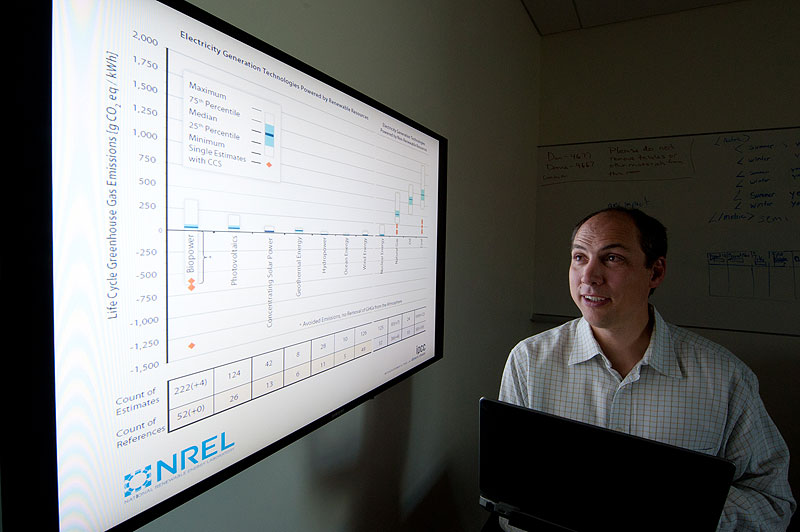
In this photo, a scientist holds a laptop, looking up at a projection that graphs greenhouse-gas emissions for various generation technologies.  Enlarge image
NREL Senior Scientist Garvin Heath works on data from the life cycle greenhouse-gas emissions study conducted by NREL's Strategic Energy Analysis Center.
Credit: Dennis Schroeder
The question of which energy technologies generate the most greenhouse-gas emissions — cradle to grave — now has a more precise answer, thanks to a meta-analysis of life cycle assessment (LCA) studies done by the U.S. Department of Energy's (DOE) National Renewable Energy Laboratory (NREL).
The new, robust analysis weighed the emissions estimates per kilowatt-hour from raw materials, manufacturing, transportation, operation, and decommissioning to get the best apples-to-apples comparisons. Sure, during operation solar panels release virtually no emissions, versus the tons of greenhouse gas produced by a large coal plant. But what about the emissions generated from the manufacture of solar panels versus, say, the turbines required for coal- and wind-based energy?
NREL's LCA Harmonization Project gives decision-makers and investors more exact estimates of greenhouse-gas emissions for renewable and conventional generation, clarifying inconsistent and conflicting estimates in the published literature and reducing uncertainty.
The analysis found that from cradle to grave, coal-fired energy releases about 20 times as much greenhouse gas into the atmosphere per kilowatt-hour as solar energy. Wind and nuclear energy are on relative par with solar energy. Natural gas generation wasn't included in the final analysis but is generally assumed to emit about half as much greenhouse gas per kilowatt-hour as coal.
What's more, the "study of studies" narrowed the huge ranges of estimates sometimes as much as 90 percent, presenting a more reliable look at the likely greenhouse-gas emissions from different technologies.

Decision-Makers Need Environmental Costs Before Giving Go-Ahead

In this photo, rows of angled, bluish solar modules dominate the foreground, while a large, white wind turbine looms in the back under a blue, partly cloudy sky.Enlarge image
A multi-megawatt wind turbine and 1-megawatt PV field work together to produce energy at NREL's National Wind Technology Center (NWTC). The turbine can produce energy at night and on cloudy days, and the PV field can produce energy during days with no wind.
Credit: Dennis Schroeder
Lifetime greenhouse-gas emissions are an increasing concern for lawmakers and investors who must weigh the merits of a new coal-fired plant versus, say, a wind farm, and need to know not just the relative dollar costs but also the potential harm or benefits to the environment.
Until recently, emissions estimates ranged wildly, sometimes because vested interests had a stake in demonstrating that a certain technology's emissions were high or low. For instance, if decommissioning costs aren't included in a total-emissions estimate for nuclear energy or natural gas, those studies give artificially low figures.
NREL was seeing surprisingly high emissions numbers for concentrating solar power (CSP) plants, but deeper digging found that many studies combined the numbers from both CSP and natural gas when a utility used combustion of natural gas to supplement solar-energy generation. When the harmonization process allowed CSP emissions to stand on their own, the numbers plunged.
NREL looked at more than 2,000 studies across many generation technologies, applied quality controls, and greatly narrowed the range of estimates to reach reliable medians for greenhouse-gas emissions.
"This methodology allows you to arrive at a better precision, so you can say with more certainty that this is the benefit you get from using this technology rather than that technology," said NREL Senior Scientist Garvin Heath, who led the project. "Anyone who wants a true comparison of the greenhouse-gas costs should benefit from this."
Heath noted that today's decisions on new plants will still have ramifications decades from now. Owners and investors will need to know about greenhouse-gas emissions and their possible effect on the bottom line, while policy-makers need to know the long-term implications of greenhouse gas on climate.
Investors "need to be very forward looking," Heath said. A power plant is long lived, and its attributes and shortcomings are locked in for decades. That's why investors push for estimates of greenhouse-gas emissions before they invest.
President Obama's clean-energy standards require these estimates for each technology as a way to assign credits or discounts for building new plants. Credits, discounts, and the possible future price of carbon all figure heavily into decisions on which technology to choose.
"Analysts and decision-makers want a more robust sense or a narrower range of uncertainty to make the best decisions," Heath said. Until now, no one has tried to differentiate between low- and high-quality estimates in a comprehensive way.

Narrowing Estimates to a More Reliable Median

Heath, Technology Systems and Sustainability Analysis Group Manager Margaret Mann, and their colleagues at NREL's Strategic Energy Analysis Center discovered that there is no shortage of reports and studies estimating the greenhouse-gas emissions of various energy technologies — in fact, there are hundreds for each — but they vary greatly in quality, consistency, and validity.
Narrowing these ranges of estimates is like hooking together a 1,000-piece jigsaw puzzle, or solving a devilish crossword.
Heath and his colleagues narrowed down the various studies to those meeting minimum thresholds for quality, relevance, and transparency. They looked upstream, making sure to include the materials that go into building a solar, wind, or coal plant. They examined in detail the emissions that occur when the plant is in operation. And they looked downstream: when a plant ceases to operate, what are the environmental costs of decommissioning it?
After harmonizing 397 LCA studies of greenhouse-gas emissions from photovoltaic (PV) projects, the study found a median of 45 grams of carbon dioxide emitted per kilowatt-hour of electricity generated. Just as important, the middle 50 percent of the range (75th minus 25th percentile) of differences narrowed — from 44–73 grams before the harmonization to 39–49 grams after the harmonization.
The 45-gram median for PV contrasts with a 1,001-gram median for coal.
Nuclear energy was found to have a large range even after harmonization reduced the published range by 50 percent, to 4–110 grams. The median harmonized estimate for nuclear is 12 grams, very similar to that of many renewable technologies.
Concentrated solar power's medians were 26 grams for parabolic trough plants and 38 grams for power towers. Thanks to harmonization, the variability in estimates for CSP was reduced by 91 percent.
Thin-film solar cell technology demonstrated very low greenhouse-gas emissions: a median of 20 grams for amorphous silicon; 14 for cadmium-telluride; and 26 for copper indium gallium diselenide, with overall ranges reduced from 19–95 grams to 18–52 grams equivalent carbon dioxide per kilowatt-hour.
For wind, the harmonization study was able to narrow down the wide range of published estimates — 1.7–81 grams — to a harmonized range of 3–45 grams (a 47 percent reduction) and a more reliable median of 11 grams of carbon dioxide per kilowatt hour.

The Fine Art of Comparing Apples to Apples

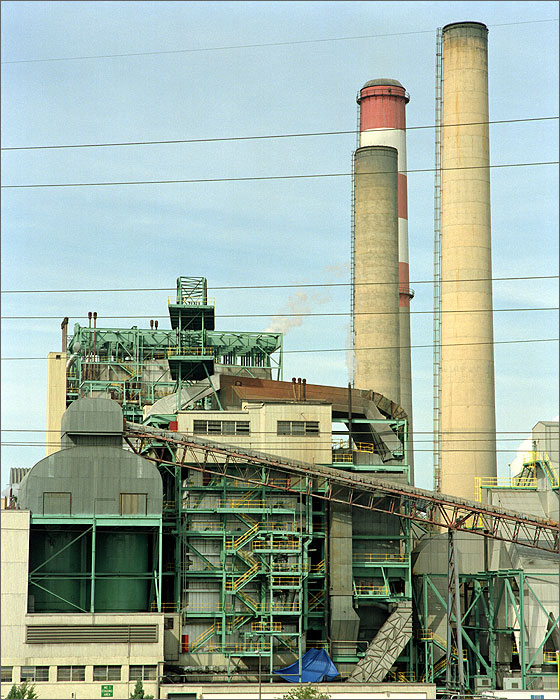
In this photo, transmission lines are in the foreground; across a body of water is a coal-powered plant featuring three tall, cylindrical chimneys.  Enlarge image
Greenhouse-gas emissions from coal-fired power plants, such as the Cherokee plant in Denver, Colorado, were compared to emissions from renewable generation in NREL's LCA Harmonization Project.
Credit: Warren Gretz
"We did a systematic review of the literature — not just peer-reviewed journals, but government reports, theses, reports from non-government organizations and private companies," Heath said. "We had to verify them all."
The team brought in experts from different disciplines, including technology experts, literature search experts, and experts in LCA.
"We screened for quality and for transparency, and we screened out the studies that were of older technologies that probably won't be going forward."
If a study didn't use sound methods, it was out. But if a good study lacked a particular variable — such as not considering decommissioning — the team used formulas to add in greenhouse-gas emissions from those activities so the otherwise-satisfactory study could be included.
"After our quantitative adjustments, each study included in the final analysis was consistent in the broad sense, if not in every detail," Heath said.
Harmonization studies help guide policy locally, statewide, and nationally. Lobbyists, lawmakers, and the cost-analysis community can all use the harmonization estimates as building blocks to make their own estimates for specific projects or to guide policy.
"They can get numbers to plug into their own models; they can use our literature to assess the climate impacts of transitioning to new forms of energy," Heath said.

Findings Appear in Special Edition of Journal of Industrial Ecology

The NREL method is being heralded as an important step forward in LCA studies that paints a clearer picture of the environmental penalties and benefits of different technologies.
NREL's findings appear in six articles and an editorial in the April special supplemental issue of the Journal of Industrial Ecology on Meta-Analysis of Life Cycle Assessments.
Also contributing to the findings were subcontractors and researchers from DOE's Brookhaven National Laboratory.
"This is great work," said Reid Lifset, editor of the Journal of Industrial Ecology. "Garvin and his crew have done something very important."

A Crucial Tool for Future Decision Making

"As a society, we need to better understand what the effects of our energy choices are," Heath said. "Greenhouse gases and climate change are a part of the discussion. As we try to envision what our future energy system will look like, we need an accurate picture of what that transition will mean."
"The scope of these syntheses is staggering and provides real insight into what can be done with the burgeoning research literature in industrial ecology," Lifset said.
Peter Crane, Yale University's dean of Forestry and Environmental Studies, agreed: "The application of meta-analysis to life cycle assessment is an important advance. Decision-makers seeking to make greener choices need a way to make sense of the information that is coming at them so quickly now. This can help."
Heath added: "If we care about stabilizing our climate, we need to look at greenhouse gases. This study assembled the best available and most robust evidence. It helps us see the state of our planet, and it can help us make better decisions going forward."
Learn more about NREL's LCA Harmonization Project and download and visualize the numerical results and bibliographies on OpenEI.org.
—Bill Scanlon

Posted originally by NREL. Please follow us on Twitter and "like" us on Facebook!
Thursday, September 6, 2012

Renewable Globe Solar and Wind Company Directory


Today marks the officially launch of both the solar and wind company Renewable Globe company database. After pushing through thousands of companies, two lists have been formed giving access to an international list of solar and wind companies. In order to access these lists please visit: Solar Companies and Wind Companies.

The lists are organized in alphabetical order as shown in the image below:


By clicking on each of the different letters, you will find yourself searching for the first letter of the first word in each company name. You will also find stock symbols and the countries each company is located in. We hope this will act as another resource for everyone as we fight to spread the word about renewable energies.

Please follow and "like" us on Twitter and Facebook


Thursday, August 30, 2012

Luther College and Decorah, Iowa, Partner to Help Create a Clean Energy Future


The Energy Department is excited to announce a new video series, "Energy in Our Community," which will feature small communities throughout the country that are striving to become more sustainable, are investing in the green economy, and are bringing the benefits of clean energy to local residents and workers. The Department kicked off the series with a video from Luther College that highlights how Decorah, Iowa, is benefiting from the projects undertaken by the college to reduce its energy waste and deploy clean, renewable energy projects campus-wide.
"'Clean Energy in Our Community’ will highlight small communities around the country working to promote clean renewable energy initiatives and how our colleges and universities in particular play a critical role in shaping our communities and driving America’s clean energy economy," said U.S. Secretary of Energy Steven Chu. "Luther College and Decorah, Iowa, are great examples of how our local communities can help lead the way in making sure that America wins the global clean energy race."
Luther College installed a 1.6 megawatt wind turbine last fall. This summer Luther established the largest zero-emission facility in Iowa by using a 280 KW solar field to power a 100 plus student residential housing complex that uses geothermal energy to heat and cool the facility. Luther has also created an Office of Sustainability, which is helping the college reach its goal of cutting its carbon footprint in half by 2015 and becoming carbon neutral by 2030. 
Along with these commitments, Luther helped others in Decorah, Iowa, establish the Winneshiek Energy District, which has helped the residents of Winneshiek County invest more than $1 million dollars in energy efficiency programs over the past two years.
Decorah and Luther College are not the only communities that are working every day to invest in the clean energy economy. Small communities across the country are continuously building partnerships to become more sustainable, relying on clean energy resources to meet their energy needs. These partnerships often include schools, nonprofits, and local governments.
The Energy Department is committed to supporting communities like Decorah as they invest in clean renewable energy that reduces carbon pollution, creates local jobs, and helps to drive local economies. This series will help connect and feature our small communities nationwide that are investing in clean energy and playing a role in making sure the United States leads the world in the global race for the green jobs of the future.
Stay tuned as Energy.gov continues to highlight communities committed to creating sustainability projects, increasing investments in the clean energy economy, and helping America win the global race for a clean energy future.


Posted originally by the Department of Energy. Please follow us on Twitter and "like" us on Facebook!

Wednesday, August 15, 2012

RenewableGlobe.com is now LIVE!


RenewableGlobe.com has officially been launched and is currently live. After a number of months of putting together this website as well as the blog that goes with it, the main portions of the site have been completed. An image of the website is seen below:


On top of completing the website, the Renewable Globe Facebook Page has grown to over 1,000 views in less than a week of launching it. A Twitter account has also been created for Renewable Globe.

Although the entire website is not complete at this time, our web and research teams are working hard to get the job done. The individual and specific pages will be complete with time detailing each type of renewable energy that we have chosen to cover at this time. Company lists will also be provided with ticker symbols and more. We appreciate everyone's support so far and will keep you posted as we will continue to grow.

Questions, comments, and/or suggestions? Please visit our Contact Us page. Thank you! 

Tuesday, August 14, 2012

The Open PV Project: NREL


Stumbled across this amazing PV project by NREL a few days ago. Herre is a little bit about it and how it can help you! Check it out.


The Project

The Open PV Project is a collaborative effort between government, industry, and the public that is compiling a comprehensive database of photovoltaic (PV) installation data for the United States. Data for the project are voluntarily contributed from a variety of sources including utilities, installers, and the general public. The data collected is actively maintained by the contributors and are always changing to provide an evolving, up-to-date snapshot of the US solar power market.

Data Collection

The Open PV Project is collecting data from any willing contributor of available information. NREL has "seeded" the Open PV database by requesting data from most state run incentive programs, large utilities, and other organizations. This initial data collection has provided a solid base of data for the project to launch from and it is our hope that the database will continue to grow through contributions from the PV community and anyone interested in understanding PV market dynamics in the US.

Data Quality

Determining the quality of incoming data is dependent upon who is submitting the data to the project. This means that data coming from users associated with a particular organization may be "trusted" more than data from other unknown users. Each registered user is assigned a default "score" based on their organizational affiliation. This score is highest for Government users (State, Federal, etc.) because such users are often involved with incentive programs that have a defined data collection process in place. Second are utility and PV installers (and others in the PV industry), and so on. All users who contribute data to the project have the ability to gain a "project reputation" that can impact the score of the data they contribute.

Validation

Data validation occurs on each record in the database on a regular basis. The database is continually analyzed for corrupt records, bad or invalid data, and outliers such as an abnormal cost to watt ratio. Records found to contain questionable data are flagged and are dealt with on a case by case basis by a member of the Open PV Team.

Duplication

Understanding duplication is one of the ways that individual records are validated. In a publicly contributed database, it is imperative to anticipate the submission of duplicate records. When duplicate records are detected, they are added to an install specific list of duplicates and the data provided are aggregated into "summary records" of their respective installs. Identifying duplicate records helps validate PV installs in the database. The more a PV installation is duplicated in the database, the more trust the project places on the data for that installation.

Data Fields

Required Fields

The Open PV Project is designed to be able to store nearly any type of information pertaining to PV installations. In order to provide the primary statistics from the database we have identified 4 data fields that are required of each PV install added to the project. These four fields are:
  • Date Installed (Completion date or interconnection date)
  • Size/Capacity of the PV Installation (in kW DC)
  • Location (Zipcode or Street Address)
  • Total Installed Cost (in USD, before incentives)

Additional Fields

The four required fields listed above provide the Open PV Project with the base information needed to derive several key statistics on the US PV market, including historical trends and regional comparisons. However, the design of the Open PV database is capable of storing nearly any type of data associated with PV installation, so the Open PV Team would like to encourage you to contribute any additional information you are comfortable sharing. This extra information can be extremely valuable, for example, data that contains information about who installed the PV installation can help to answer very useful questions about where certain installers are working. Information on module or inverter types can be useful in mapping efficiency and detailed financing information can be a key factor in understanding trends in overall installation cost. The Open PV Team strongly encourages you to contribute any data you feel comfortable providing, especially data you would like to see visualized in our gallery someday.


Here is a screenshot of what the homepage looks like. It is truly an amazing tool!


Please follow us on Twitter and "like" us on Facebook!
Friday, August 10, 2012

Dubai Takes Solar Energy to a Whole New Level


Dubai Solar Energy

Dubai Municipality plans to use solar technology to reduce its consumption of traditionally produced electricity and water by 20 per cent over the next five years.
"[The municipality has] taken a number of initiatives in terms of energy efficiency and conservation," Nejib Zaafrani, the chief executive of the Dubai Supreme Council of Energy (DSCE) said yesterday.
Solar energy plays a part in the efforts to go green and lighting in parks and public places will in future be powered by solar panels.fit buildings with systems designed to save energy. As part of its overall energy strategy, the DSCE has identified a number of "quick wins" - measures that can easily be implemented to conserve energy and water.

Other Dubai Government entities will join the Municipality with similar efforts.
"We're moving to a wider space in energy savings by implementing energy conservation measures," said Mr Zaafrani. Dubai has managed to curb the rising costs of utility provision by drawing up a programme to moderate the consumption of electricity and water.
Deterred mainly by the resultant hefty increases in utility bills, Dubai residents have reduced their use of both.
This has enabled the Dubai Electricity and Water Authority (Dewa) to postpone the construction of a large-scale power plant, the 1,500 megawatt Hassyan project.
Dubai relies entirely on imports to meet its requirements for natural gas - the primary fuel for power plants in the region.
The emirate is forced to import expensive liquefied natural gas to meet spiralling demand during the summer and is passing on the additional cost to consumers in the form of a fuel surcharge.
To reduce the dependence on fossil fuels, the DSCE in January announced plans for the 1,000MW Mohammed bin Rashid Al Maktoum Solar Park.
This renewable energy facility is due to be completed by 2030.
This article was originally published by The National. Please follow us on Twitter and "like" us on Facebook!

Monday, August 6, 2012

Solar Stocks Rise High!

Renewable energy stocks fly high after positive, industry information is released!

Digitimes, Taiwan's Photonics Industry & Technology Development Association stated that Germany first-quarter installs, the largest solar panel creation customer base, rose 283% to nearly 2.0 gigawatts. China having an additional 1 gigawatts of projects in process as well and U.S. first-quarter installations grew 85% to 50 megawatts. 

After watching a majority of Solar stocks fall drastically to what looked like no bottom, they have been on fire the past few weeks with big news on earnings and new projects. These may be the stocks to watch as it seems their profits are holding strong through a dangerous economy. Read more...

Some of the big movers today include First Solar (Nasdaq: FSLR), SunPower (Nasdaq: SPWR), Ascent Solar Technologies (Nasdaq: ASTI), Yingli Green Energy (NYSE: YGE), and Trina Solar (NYSE: TSL).

Renewable Globe, Live on Blogspot!


Renewable Globe, Renewable World, Renewable Energy, Solar, Wind, Geothermal, Hydroelectric

RenewableGlobe.com is a new website focused on providing continuous, up to date information on renewable energy around the world. The website that will provide this information is currently under construction. The website is linked with this blog as well as Facebook. As the website becomes developed and this blog begins providing relevant information we will be sure to keep you up to date on our status. We welcome both constructive criticism and compliments in any form. Thank you and please follow! Read more...
